
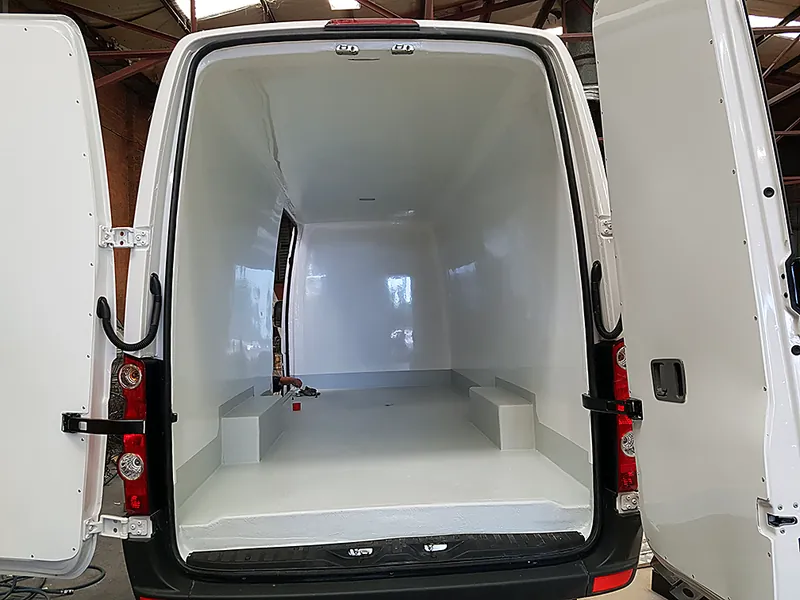
What we repair on refrigerated bodies
- Damaged insulated panels and the foam behind them can be repaired or replaced.
- We repair interior linings, corners and coving to restore the seal and leave hygienic surfaces that are easy to clean.
- Floors that are water-damaged or delaminated are replaced, and the floor-to-wall joints are resealed.
- Door seals, hinges, locks and hold-backs are replaced as needed, and we can fit strip curtains at the same time.
- In multi-temperature bodies, we repair or replace the bulkheads between zones.
- Racking, meat rails and load restraint fittings are repaired so they hold the load properly.
- Accident damage to the outside of the body is repaired and resealed.
Why small problems are worth fixing early
Once moisture gets into the insulation, the body loses temperature, the unit has to work harder and the damage keeps spreading. Fixing a seal or a split lining early costs a fraction of what it costs to replace panels later on. Our guide to monthly checks for refrigerated bodies shows what your drivers can look for.
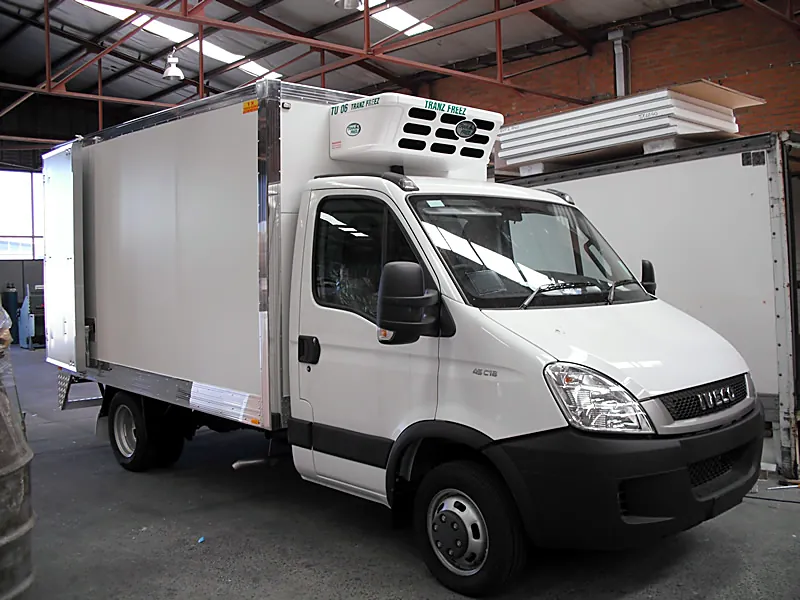
Keeping downtime short
Refrigerated trucks are usually the hardest ones to do without, so it helps to send us photos first, which lets us order materials before the truck arrives. Fleet customers can also book repairs into planned downtime through our fleet services.
Common questions
Why is my refrigerated body losing temperature?
The most common causes are worn or damaged door seals, a damaged panel or lining that has let moisture into the insulation, and water getting into the floor, and a body inspection usually finds the problem quickly.
Can you repair a damaged insulated panel?
Yes. Depending on the damage, we either patch and reseal the skin or cut out and replace the damaged section of panel and insulation, and then reseal it to restore the seal and leave a hygienic surface that is easy to clean.
Do you fix the refrigeration unit?
No. We repair the insulated body, panels, floors, doors and seals, and when the refrigeration unit needs attention we coordinate with a refrigeration technician so that, where possible, the truck is only off the road once.